Let’s design to the edges for every learner.

Beth Stark, home
Accessibility Statement
Ask LUDIA

What Partnership Looks Like

I work with leaders and teams on the systems behind inclusive learning communities.

Four Ways We Work Together

  • UDL at Every Level

    We apply UDL to the curriculum design your educators already do, starting from their own goals. Over time, it becomes part of how they plan.

  • Curriculum and Instruction

    • Up close: units, lessons, and assessments
    • Across teams: learning that connects across subjects and years
    • Whole system: how curriculum is designed, reviewed, and updated
  • Professional Learning

    Online, in person, or both. Built from what your teams are working on now.

  • Accessible & Inclusive Technology

    Technology should reduce barriers, not create new ones. We map your digital tools to your values as a community.
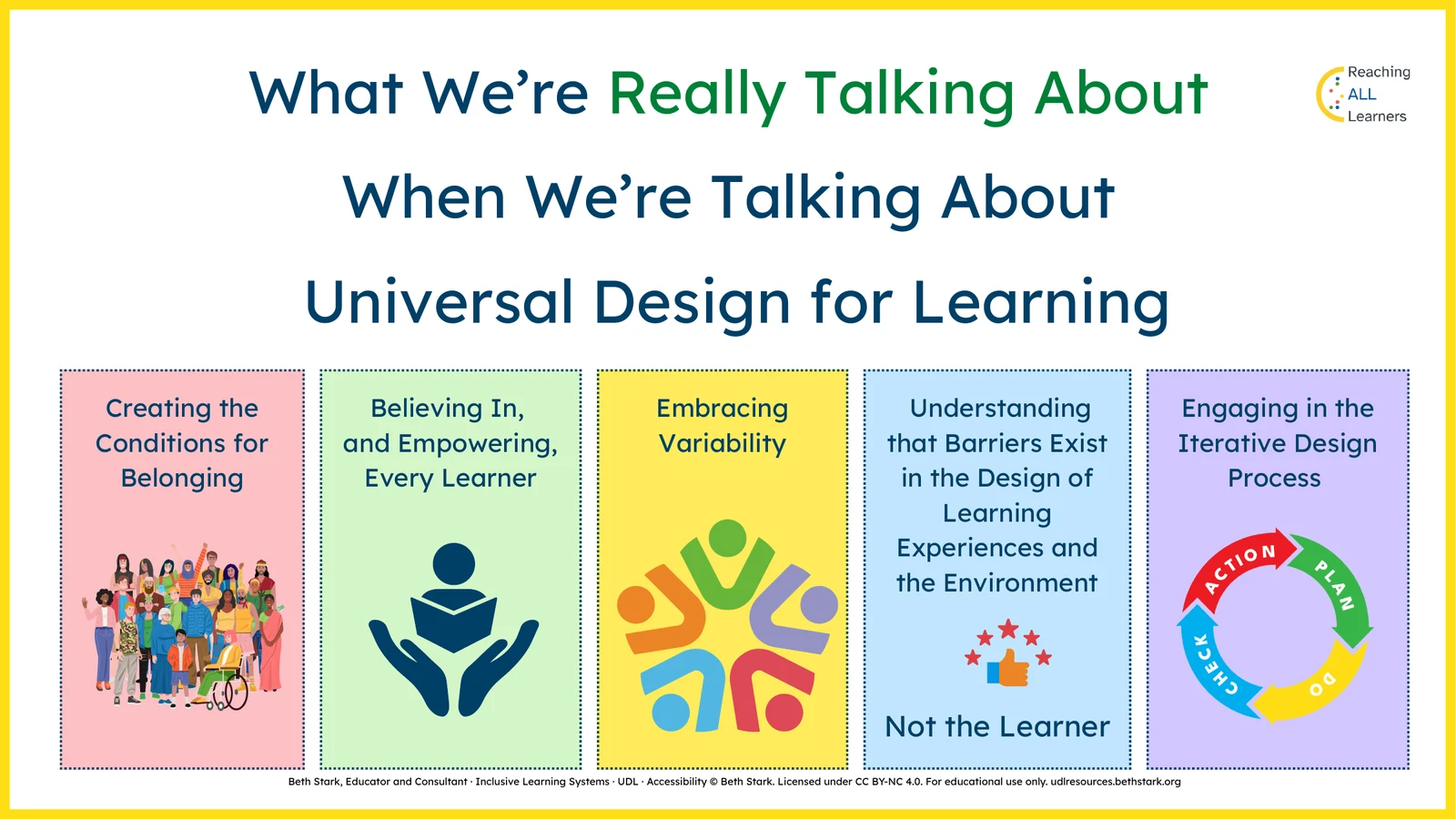
What we’re really talking about when we’re talking about Universal Design for Learning: creating the conditions for belonging; believing in, and empowering, every learner; embracing variability; understanding that barriers exist in the design of learning experiences and the environment, not the learner; and engaging in the iterative design process.

UDL + MTSS + Learning Support: Making the Connection

How do these fit together, and what matters most when you decide? Book a conversation and I will share a complimentary copy of UDL is How We Design; MTSS is How We Respond.

From Educators and Leaders I've Worked With

  • "Beth grounded UDL in what truly matters: inclusive education begins with strong, meaningful relationships with our learners."

    Rebecca Toth JurasDirector, Vilnius International School
  • "We could not ask for a more inspiring, knowledgeable, and compassionate UDL consultant than Beth."

    Daun Yorkeformer Head of School, Hanoi International School
  • "Beth really understands how different learners function and has a route to get through to all of them."

    Emily HardyES ELL Teacher, American International School of Johannesburg
  • "Beth has the magic to inspire people to think, question and develop teaching, and we are really grateful to have an opportunity to learn from her."

    Petar OgrizovićDeputy IB MYP Coordinator, International School of the Hague
  • "It was wonderful to welcome Beth Stark to work with our staff on UDL and inclusive practices! The discussions around a culture of belonging and its relationship to inclusive practices were powerful and will continue to drive our thinking. Thank you for your passion for increasing access for ALL learners! It was a joy."

    Carla Marschallformer Director, Dresden International School
  • "Beth has a contagious energy and drive. Her mission-oriented passion to reach all learners, coupled with her deep knowledge of inclusion and UDL, make her uniquely qualified to help schools create systems that propel all students to success."

    Erin Lillis KentLiteracy Expert, Owner of Erin Kent Consulting

Speaking and Keynotes

Practical talks about designing to the edges:

  • Embracing variability shapes what comes next.
  • Barriers live in the design, not in learners.
  • High expectations and flexible pathways belong together.
Visual notes from the keynotes at the English Schools Foundation Professional Learning Day in Hong Kong, where I spoke to more than 900 educators.
Illustration by Chris Gadbury
The ECIS Global Pedagogy Certificate 2026-2027. Image courtesy of ECIS.

ECIS Global Pedagogy Certificate

I lead the UDL full-day session, online:

  • Tuesday 10 November 2026
  • Tuesday 12 January 2027

8:45 AM to 2:30 PM (London / UTC)

Explore the full ECIS certificate

New Workshop: Fostering Learner Agency in Secondary School

The final years of secondary school are demanding by design. Those demands open the door to a crucial question: How do I learn best?

A full day with your team, plus a virtual resource hub. Students learn to ask and answer five questions:
  1. How can I design worthy goals for my learning in secondary school?
  2. Where is my thinking right now? (feedback through SOLO Taxonomy)
  3. How do I respond to inner and outer expectations?
  4. How do I protect my deep learning time?
  5. How can I design an effective study routine?
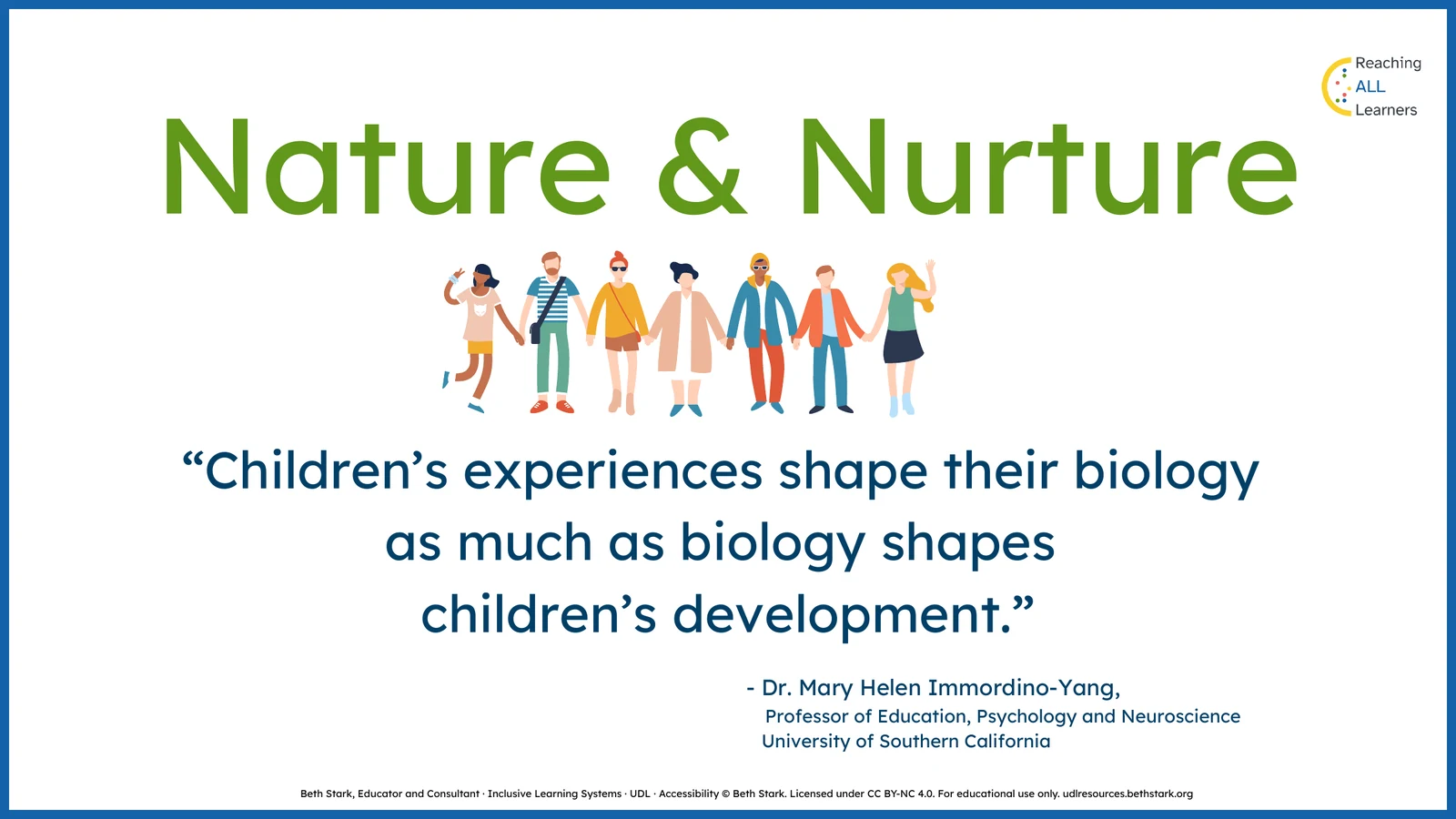
Nature and Nurture. A row of diverse people holding hands above a quote from Dr. Mary Helen Immordino-Yang, Professor of Education, Psychology and Neuroscience, University of Southern California: “Children’s experiences shape their biology as much as biology shapes children’s development.”

Accessibility and Settings

Listen to this page
Font
Text size
Line spacing
Letter and word spacing
Colours
Motion